
Are you worried about how to prevent fleas and ticks on dogs? While you may commonly see these parasites attacking your dogs in summertime, but, the truth is that they can surprise your furry friends all year, during monsoons as well as in winters.
In this article, we will look at subtle indicators, preventive methods, and natural cures to keep your dogs safe.
How will you Spot Signs of Ticks in Dogs?
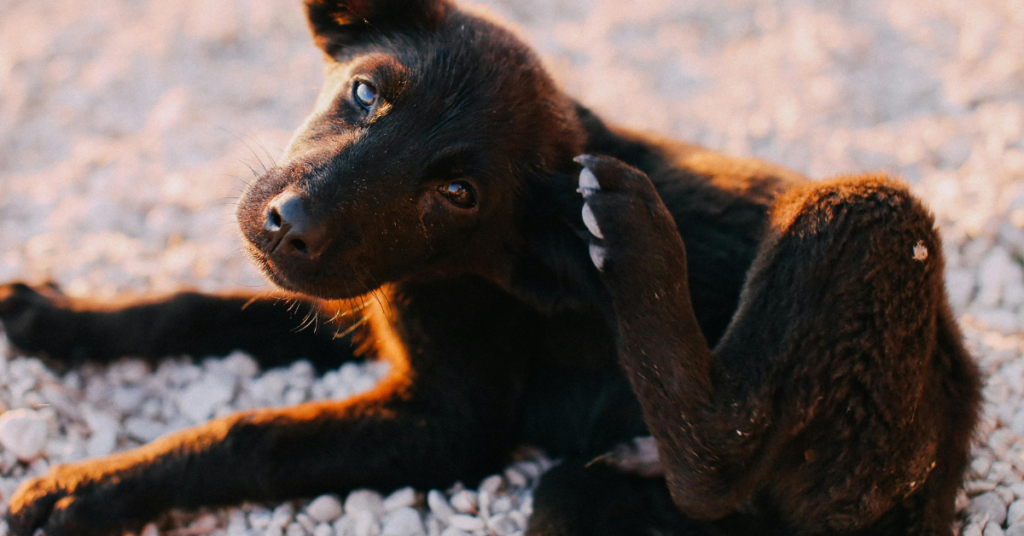
Keep a watch out for symptoms such as excessive licking, scratching, or itching. Alarming actions like shaking heads and scratching ears may indicate a tick invasion. However, ticks are hidden organisms that are difficult to wipe out. They stealthily lay eggs beneath the warm fur, growing undetected. Just when you thought you had rid your pet of all ticks and fleas, another one could be hiding beneath its hairy coat.
Where to Check for Fleas and Ticks in Dogs:
Wondering where these small troublemakers hide? Fleas like to hang out in the groin and buttocks area, between paw pads, on eyelashes, inside ear flips, on the belly, and in the armpits.
Run your hand down your dog’s spine, against the fur growth. If you feel those bumps on your dog’s skin, these could be the ticks, disguised and ready to crawl and hide beneath your dog’s fur. They prefer regions under the neck, at the base of the tail, neck, and eyelids. These if not treated on time can cause tick-borne disease that may cause severe health hazards in the long-run.
Differentiating Between Fleas and Ticks:
Differentiating between ticks and fleas is similar to solving a mystery.
Consider a flea: A quick, six-legged, wingless bug capable of jumping incredible distances.
Now meet the tick: A critter with six to eight legs that looks like a spider.
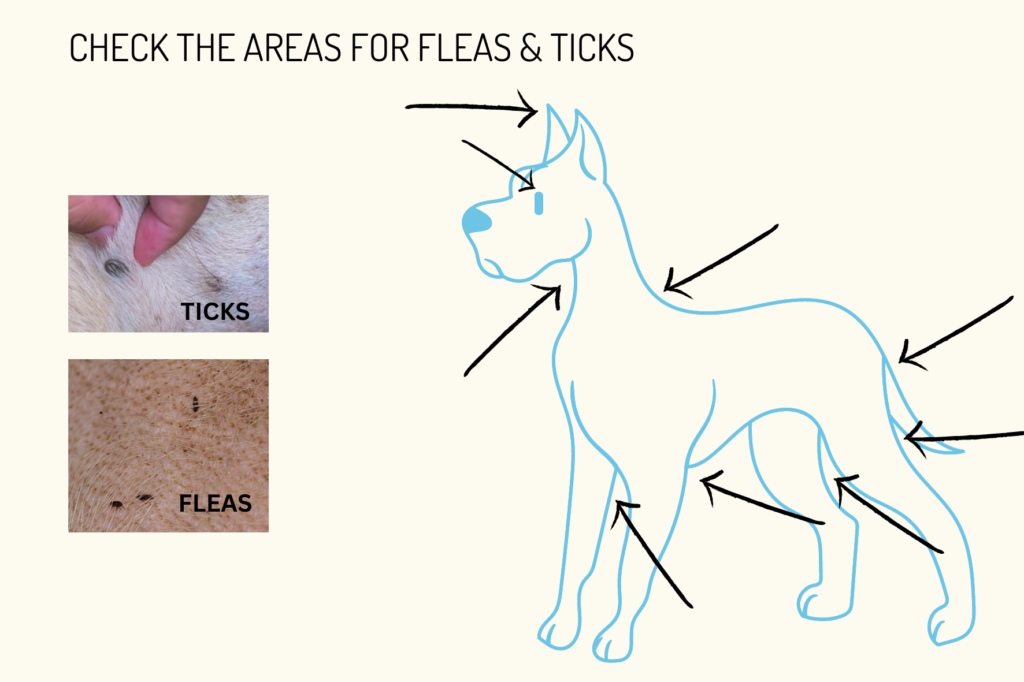
Surprisingly, fleas are a higher concern, as they can transmit tapeworms and typhus. If you see a fast-moving insect in your pet’s fur, then this is a flea making a quick escape. Their small size and ability to jump make them tricky. In contrast, if you see a large, spider-like intruder, you’ve found a tick. Ticks are larger than fleas, making them easier to spot, but they are no less bothersome. These bloodsuckers can leave behind lumps and large blood clots on your dog’s skin
Natural Remedies to Get Rid of Fleas and Ticks in Dogs:
The battle with ticks and fleas can be stressful and worrying for both you and your pets. But don’t worry; there are natural cures available. These persistent parasites lay many eggs at once, which requires quick action. While there are numerous flea-repellent solutions in the market, many of them contain chemicals that your pet may unintentionally ingest. Choosing natural solutions not only aids in the holistic elimination of your pet’s body but also safeguards your home as ticks can infest the floor and walls of the room in which your dog stays the most.
Do not pick them up and throw them away as they will crawl back onto your dog’s body. Instead, consider the following steps for prevention:
Neem Leaves: Use neem leaves, a powerful natural tick repellent, to make your tick and flea free. Make a neem-infused water bath for your pets by boiling neem leaves in a tub of water with a drop of neem oil. Neem leaves’ antibacterial and antiseptic characteristics make them an excellent natural tick repellent to prevent ticks and fleas in dogs as well as on cats.
Mint Leaves: Mint acts as a natural tick repellent. To make a mint spray, soak mint leaves overnight and add lemon juice, apple cider vinegar, and a few drops of neem oil for extra effectiveness. Spray this combination on your pet’s bedding and throughout your home.
Bay Leaves: Ticks dislike the smell of bay leaves. Crush or grind the leaves and rub them over your pet’s body. You can also place bay leaves on the bedding to prevent ticks from multiplying.
Vinegar: Soak a cotton ball in vinegar and gently rub it over your pet’s skin to get its benefits. Ticks, run away from vinegar because of its acetic acid concentration, and hence, will be less likely to hide beneath the fur.
Clove: Clove is an effective anti-repellant in the fight against ticks. Grind cloves with neem leaves or massage clove essential oil all over your dog’s body to prevent ticks from spreading.
How to Prevent Fleas and Ticks on Dogs:
When dealing with a flea and tick infestation, a thorough strategy is your best chance. Use tick preventive measures like natural tick repellents available from herbal brands including sprays, lotions, powders, and shampoos. These products contain less chemicals, making them a safer option for your pet. For a comprehensive flea and tick treatment, combine these items with the methods listed below.
Brush Your Pet: Use a Ticks and Fleas Removal Comb to thoroughly brush your pet. This will allow you to locate and remove ticks.
Pre-Bath Massage: Give your dog a pre-bath massage with neem oil, tulsi oil, or clove oil. Follow up with a natural tick-repellant shampoo. This will ensure complete coverage while bathing in neem-infused water.
Post-Bath Brushing: Following the bath, immediately brush your dog’s body to eliminate any inactive or dead ticks.
Tick Repellent Powder: Once the fur is dried, apply a tick repellent powder to keep ticks from feeding on your pet.
Nutritious Diet: A balanced meal, including eggs, will strengthen your pet’s immune system and help to prevent anaemia. You can also offer vitamin supplements for overall wellness. Always consult a veterinarian before giving any medication or supplements.
Snopy’s Tips:
To permanently eliminate ticks and fleas from your pet and home, consider these recommendations:
1. Proper Tick Disposal: Do not simply throw ticks out the window. They will return, lured by your pet’s smell. Instead, place them in a bottle of kerosene to make sure they are destroyed.
2. Mop your home with Kerosene: Use kerosene to clean your home and keep ticks at bay.
Write to us at snopys@snopys.in if you want to know more of such topics and suggestions and we shall come up with it for you.