

It’s already summer and soon the temperature is likely to cross over 40C in major parts of the country. As the temperature rises, it is important to pay attention that our pets also feel the heat. Summer care for pets is essential to keep your pets healthy and comfortable during the hot months. As a responsible pet owner, you must take the necessary safety precautions to keep your pet healthy and happy during the summer months.
In this blog, we will discuss 10 tips on summer care for pets to keep your furry friends safe and happy during the summer months.
Summer Care & Safety Measures for Pets
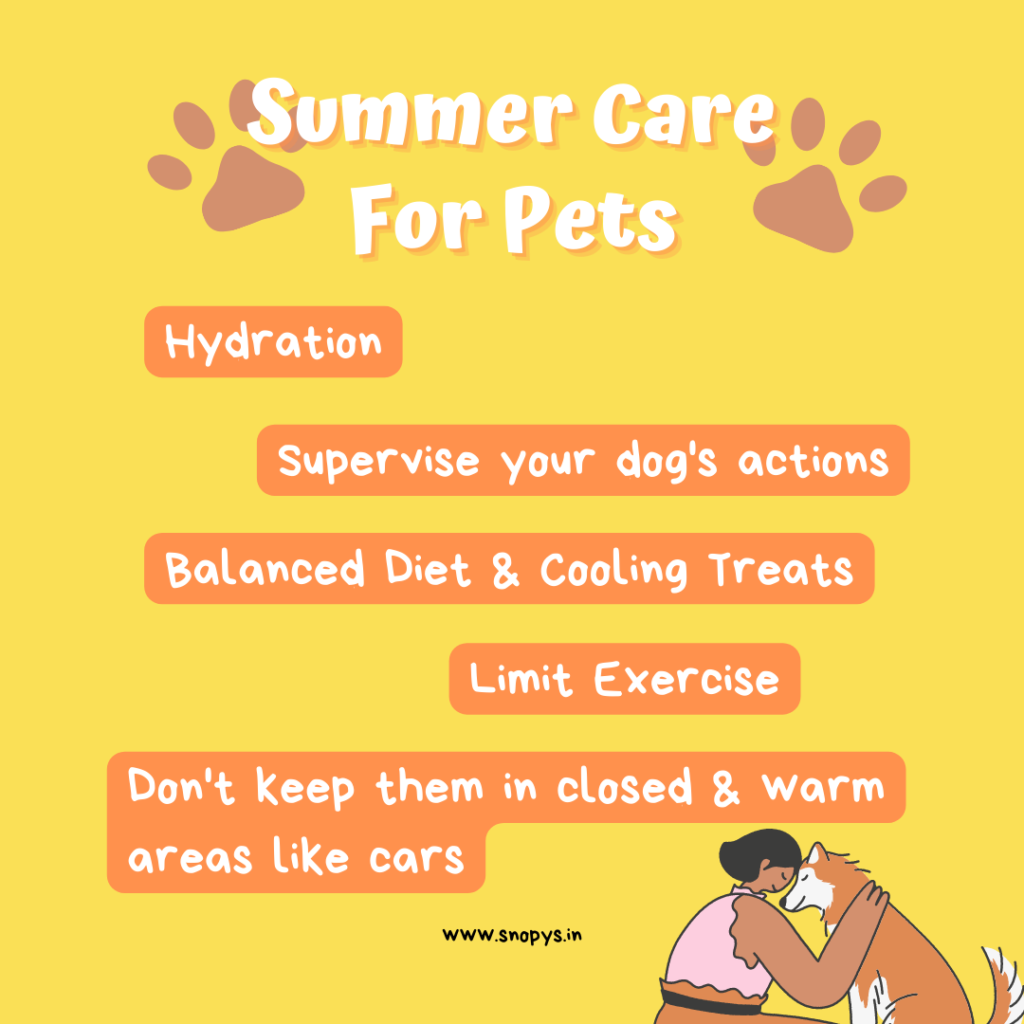
- Keep Your Pets Hydrated: One of the most important things to remember during summer care for pets is to keep them hydrated. Make sure your pets always have access to clean and fresh water. If you’re going on a walk, bring a portable water bowl and a bottle of water for them. Tap, filtered, or bottled water is safer than allowing your pet to drink from street, puddled water or runoff, all of which can carry hazardous contaminants. Bring extra water and a travel bowl whether you’re out walking, or otherwise away from home with your pet. Prefer ORS.
- Preventing Heatstroke: Overheating is the most common summer concern for dogs and cats. Heatstroke or hyperthermia can occur when a pet’s temperature rises to 104°F or higher. Heatstroke can be fatal, especially in dogs. It is however, preventable if caught and treated in time.
- Check on Your Pet: Pets with short muzzles, such as Pugs, Pekingese, Bulldogs, and Persian cats, frequently have breathing issues. Because they cannot pant as effectively, they are more prone to heatstroke. Overexertion and overheating are more likely in older pets, puppies, overweight animals, and those with heart, lung, or other medical issues. They should be kept out of the sun and heat as much as possible. Signs of heatstroke should be closely monitored.
- Provide Shade: Never leave your pet in the car even in slightly warm weather or for short periods of time. Whether your pet is inside or outside, make sure they have a cool and shaded spot to rest in. If you’re going outside for an extended period of time, consider bringing a portable canopy or umbrella to provide shade for your pet. Don’t leave your pet in the car as it can be dangerous and can lead to heatstroke or even death for your pet.
- Balanced Diet: Feeding a balanced diet to your pets is important, especially during summers to maintain a good health. Coolers like for fans, ice cubes in water bowls, and pupsicle or catsicle treats are excellent ways to keep your pet cool. However, fans are less effective at cooling pets than people. Air conditioning provides an ideal escape from the summer heat for both pets and humans. But if you don’t have air conditioning, give your pet access to cool spots in your home that don’t get much sun. Make sure your pet’s water bowls are always full and accessible.
- Outdoor time: In warmer weather, a pet might easily overexert herself. To counteract this, take breaks between games and drink plenty of water. Instead of noon, schedule walks or outdoor play time in the early mornings and evenings after the sun has set. However, regardless of the weather, pets should not be left outside unaccompanied for a lengthy amount of time.
- Pavement: Hot pavement can burn paw pads. Take your dog for a stroll in the morning or evening when it’s colder. Make them walk in the grass, or use dog boots or socks.
- Grooming: Long hair will help keep your pet cool. Shaving can cause more harm than good. So, clip your hair instead of shaving it. The layers of a pet’s coat protect him from overheating and sunburn. Groom your dog or cat more frequently instead to remove loose fur that might lead to overheating.
- Hosing down: Spraying your pet down with a garden hose is a quick way to lower her body temperature, but excess hose water heats up in the sun and can burn your pet. Let the excess water spray out, then check the temperature with the back of your hand before using on your pet.
Pests, allergens, and toxins: Pests, Fleas, ticks and tapeworms are more problematic during the summer, and all present serious health dangers to dogs and cats. Know how to check your pet for ticks and remove them safely. Summer is prime time for allergic reactions that can cause itchiness and hot spots. Insect bites and grass allergies are common irritants. Talk to your veterinarian if your dog or cat is especially itchy, or has sores that will not heal, dandruff or bald patches. Some pets are allergic to flea bites; even a single bite from a passing flea can cause them to scratch excessively.
You must keep your pets active: Keeping your pets active is essential but it’s also important to be careful with exercise during the summer. Avoid exercising during the hottest part of the day. Take frequent breaks to allow your pet to cool off. If your pet shows signs of exhaustion or heatstroke, such as excessive panting, drooling, or lethargy, stop exercising immediately and seek veterinary attention.
Do not ignore Summer care for pets as it is essential for your pet’s safety the hot months. By following these tips, you can ensure that your pets stay healthy and comfortable during the summer.